
International Travel Essentials: A Complete Travel Packing Checklist for Indian Travellers
Posted on November 21, 2026 By Flying Squirrel Holidays
Nobody wants to reach the airport only to realise that the passport has expired or the right plug adapter is still at home.
Packing for an international holiday does not mean carrying a suitcase with items for every possible scenario. Smart packing simply means knowing what a specific trip calls for and bringing only what matters.
A bit of planning before opening the suitcase saves plenty of hassle later. The weather at the destination, daily activities, and the number of places on the itinerary all play a big role in what is actually needed. Alongside clothes, preparing for the trip also involves lining up travel documents, foreign currency, basic medicines, and electronics.
This international travel packing checklist guide breaks all of those details into one place. Follow this list to pack smart, stay well within baggage limits, and head to the airport feeling completely sorted.
So, where should you start?
Every holiday calls for a different kind of preparation. And it all starts with choosing the right journey. Explore the best international tour packages with Flying Squirrel Holidays and find a trip that feels right for you.
Before You Pack: What to Arrange for Your International Trip
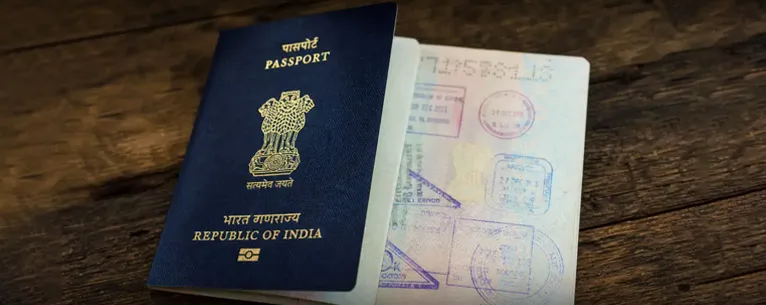
Before you get your suitcase out, there are a few international travel essentials to take care of. From checking your passport and visa to arranging foreign currency, travel insurance, and mobile connectivity, sorting these things in advance will make the rest of your travel preparations much easier.
1. Check Passport Validity, Visas, and Entry Rules
Start by checking the passport’s expiry date and physical condition. Many countries require at least six months of validity beyond the return date, while others follow specific entry rules. Review visa requirements for every destination on the itinerary, including transit visas for connecting flights.
Save digital copies of all flight tickets, hotel bookings, passports, and visas. Print physical backups just in case. Sharing the final itinerary and emergency contact details with family back home adds an extra layer of safety.
2. Organise Foreign Currency and Payment Options
Sort out foreign currency a few days before departure rather than waiting until reaching the airport. A multi-currency forex card works well for everyday spending, while for a reliable backup, keep an international credit or debit card. Carrying some local cash helps with small purchases, tips, and local transport where cards are not accepted.
Before leaving, ensure all cards are enabled for international transactions. Check foreign transaction fees, daily withdrawal limits and the bank’s international helpline number in case of payment issues abroad.
3. Plan Mobile Connectivity
Landing in a new country without mobile data makes simple tasks like booking a cab or finding a hotel much harder than necessary. Before flying out, take a few minutes to compare international roaming packs with local SIM cards or a travel eSIM based on trip length, daily data habits and how many countries are on the route.
Download offline maps and save hotel addresses on the phone before leaving home. It is also a smart backup if the network takes a while to connect. Keeping an Indian SIM active for incoming SMS helps too, especially when online bookings or card payments ask for a bank OTP abroad.
4. Buy Travel Insurance and Check Medical Rules
Purchase comprehensive travel insurance before the trip begins. Review the coverage details, especially for medical emergencies, hospitalisation, trip cancellations and delayed baggage.
Don’t forget to carry your regular prescription medication for the entire trip, along with a valid doctor’s prescription. Finally, check whether the destination requires specific vaccinations or health certificates before arrival.
What Should You Actually Pack in Your Suitcase?
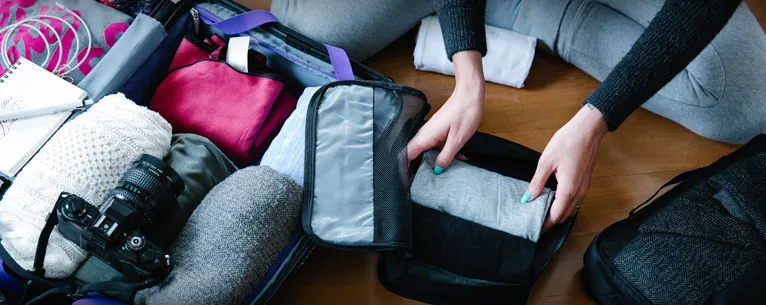
Now comes the part most people think about first: the clothes, shoes, toiletries and other personal belongings.
The most useful international trip packing list is one that reflects your actual itinerary. Start by considering how many days you will be travelling, what the weather will be like and what you plan to do. This will help you decide what deserves space in your suitcase.
Here are the essentials to consider.
1. Clothing and Footwear
Choose clothes that are comfortable, easy to mix and match and suitable for your itinerary. You don’t need a separate outfit for every day.
- Everyday outfits, innerwear and sleepwear.
- Weather-appropriate jackets, sweaters or light layers.
- Swimwear for beach or pool holidays.
- Comfortable walking shoes.
- Sandals or slippers.
- Activity-specific footwear, if required.
- A change of clothes suitable for religious or cultural visits.
Check the weather forecast before packing. A little planning will help you avoid carrying clothes you won’t use.
2. Toiletries and Personal Care
Carry your regular personal care products, especially those you prefer using daily.
- Toothbrush and toothpaste.
- Shampoo, conditioner and body wash.
- Face wash, moisturiser and sunscreen.
- Deodorant and personal hygiene products.
- Hairbrush, comb and grooming essentials.
Travel-sized containers can save space. Just remember to check liquid restrictions if you plan to keep them in your cabin bag.
3. Medicines and Health Essentials
Keep your regular medicines, basic first-aid supplies and other personal health essentials handy. Depending on your destination, insect repellent or motion-sickness medication may also be useful.
Keep prescription medicines in their original packaging and carry the necessary supporting documents.
4. Electronics and Travel Accessories
A few useful gadgets and accessories can make your holiday more comfortable.
- Mobile phone and charger.
- Universal travel adapter.
- Power bank, subject to airline rules.
- Camera and accessories, if needed.
- Headphones or earphones.
- Charging cables.
- Sunglasses and a hat.
- Day backpack and reusable water bottle.
- Packing cubes and a laundry bag.
Check the plug type and voltage requirements at your destination before packing your chargers and adapters. You may not need to carry every accessory, so choose according to your travel plans.
Let Your Destination Decide What You Should Carry

Here is something worth remembering when putting together an overseas travel checklist: two people travelling abroad for the same number of days may need very different items.
A week in Bali does not call for the same wardrobe as a week in Finland. And a holiday covering four European cities requires a different luggage strategy from a relaxed stay at one beach resort.
Before finalising your suitcase, consider the destination, season, and planned activities.
For Tropical and Beach Holidays
A few days by the beach in Bali, island-hopping in Thailand or exploring Vietnam? For Bali holidays and other tropical escapes, think light fabrics, easy-to-dry clothes, comfortable sandals, swimwear and plenty of sun protection. A compact rain jacket is worth carrying too, especially during the rainy season.
For Winter and Snow Holidays
Planning to spend a few nights chasing the Northern Lights in Finland or Norway? Those long evenings outdoors can get seriously cold. For a Northern Lights holiday, pack thermal layers, an insulated jacket, warm gloves, a scarf and winter footwear that can handle snow and ice.
Also check whether you need specialised equipment for activities such as skiing or snow trekking. Some equipment may be available to rent at your destination, so you may not need to carry everything from home.
For Multi-Country Holidays
When your itinerary covers several destinations, think carefully about how much luggage you want to move around.
Thinking of travelling through France, Switzerland and Italy in one holiday? A multi-country Europe holiday often means changing hotels, catching trains and moving between cities. A suitcase that is easy to handle, clothes you can wear in different combinations and a comfortable pair of walking shoes will make a real difference along the way.
For Adventure and Cultural Holidays
Trekking, cycling, wildlife safaris and outdoor excursions may require specific clothing, footwear or personal equipment. Check the requirements before departure rather than assuming your regular holiday clothes will be sufficient.
For visits to temples, monasteries and other religious sites, look up local dress expectations. In some places, modest clothing and footwear that can be removed easily are worth planning for.
A little destination research can save you from carrying unnecessary items while ensuring you have what you need for the experiences you are looking forward to.
Every destination comes with its own considerations, and a little expert guidance can help you prepare. At Flying Squirrel Holidays, we help travellers think through the route, season and experiences before the holiday takes shape. Speak to our travel agents in India for international travel and start planning a trip around the way you want to explore.
What Goes in Your Cabin Bag and What Goes in Checked Luggage?
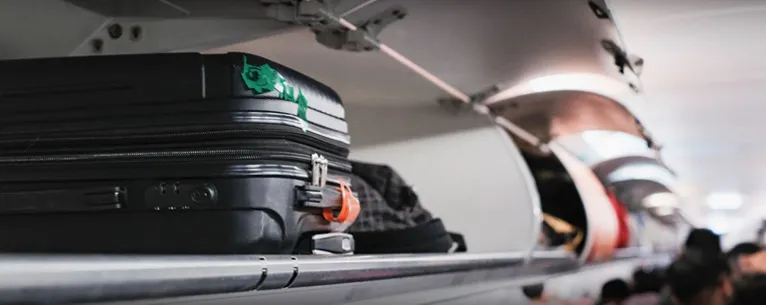
Once you have decided what to carry, the next question is where to pack it.
Your cabin bag should contain things you may need during the flight and belongings you would not want to lose access to if your checked luggage is delayed.
| Cabin baggage | Checked luggage |
| Passport, visa and important travel documents | Most clothing and spare outfits |
| Wallet, cards and essential cash | Shoes and larger accessories |
| Essential prescription medicines | Toiletries permitted under baggage rules |
| Phone, laptop and valuable electronics | Other personal belongings |
| Power bank and spare batteries, subject to airline rules | Items permitted in the aircraft hold |
| A change of clothes and essential personal items | Bulky items not needed during the flight |
A few packing rules you must give attention to:
- Power banks and spare batteries: Carry these in your hand baggage, not checked luggage. Check the permitted battery capacity with your airline. If your cabin bag is taken at the boarding gate and moved to the hold, remove your lithium-battery-powered devices and spare batteries first.
- Liquids in cabin baggage: Many international airport security checks restrict liquids, aerosols and gels, commonly limiting individual containers to 100 ml. However, security arrangements can differ by airport and route. So, check the rules properly.
- Airline baggage allowance: Check the permitted weight, dimensions and number of bags included in your ticket. Allowances can vary by airline, route, cabin class and fare type. Don’t assume that the baggage allowance on your international flight will automatically apply to your connecting or domestic flight.
Ready for Your Next International Holiday?

Packing well is about knowing what your journey calls for and being prepared for the experiences ahead. Check the requirements for your destination, pack according to the weather and activities and keep the essentials within easy reach.
Of course, a well-planned holiday starts long before you pack your suitcase. When choosing the best international travel agency in India, look for a team that understands the destination, listens to your preferences and pays attention to the details that shape your experience.
At Flying Squirrel Holidays, that’s where we begin. We take the time to understand what you want from a holiday and plan around your interests, pace and priorities. So, where are you thinking of travelling next? Let’s start planning.
Frequently Asked Questions
What are the most important things to carry when travelling internationally?
Carry your passport, visa, flight details, travel insurance, payment cards, essential medicines, phone and charger. Add clothing and accessories suited to your destination.
What should I keep in my cabin baggage?
Keep your passport, travel documents, money, essential medicines, valuables, phone, laptop and power bank in your cabin bag. Also carry a change of clothes in case your checked luggage is delayed.
How can I avoid overpacking for an international holiday?
Plan your outfits around your itinerary and choose clothes you can mix and match. Pack only what you are likely to use and check your baggage allowance before leaving.
How early should I start packing for an international trip?
Start organising your documents and travel essentials a few weeks ahead. Pack your suitcase two or three days before departure so you have time for a final check.
Can I carry Indian medicines when travelling abroad?
Yes, but check whether your medicines are permitted in the destination country. Keep them in their original packaging and carry the required prescription.
Can I carry homemade food or snacks on an international flight?
Many packaged snacks are permitted, but fresh food, meat, dairy and other products may face customs restrictions. Check your airline and destination-country rules before packing.
Do I need a universal travel adapter for an international trip?
A universal adapter is useful when your devices have plugs that don’t fit the sockets at your destination. Check voltage compatibility too, as an adapter does not convert electrical voltage.
Can I carry a power bank in checked luggage?
No. Power banks and spare lithium batteries should generally be carried in cabin baggage. Check your airline’s capacity limits and handling requirements before flying.
What clothes should I pack for an international holiday?
Pack according to the destination’s weather and your planned activities. Comfortable outfits, suitable footwear and a few versatile layers are a good starting point.
How do I keep my luggage within the airline’s weight limit?
Check your ticket’s baggage allowance, weigh your suitcase before departure and avoid carrying duplicate or unnecessary items. Leave some room for shopping and souvenirs.